


We love the deadlift, and you should, too. Pulling weight from the floor strengthens your posterior chain (hips, glutes, hamstrings, and back), increases bone density, and reinforces one of the most fundamental movement patterns we engage in daily — the hip hinge. (1)
If your goal is to build a stronger deadlift, it’s helpful to have progress benchmarks. Concrete numbers provide a star to reach for, a metric that motivates you and informs your deadlift program each time you wrap your hands around one of the best barbells. Below, you’ll find a chart outlining deadlift strength standards that beginners to advanced athletes should strive for, along with tips on improving your deadlift.
Key Takeaways
- A measurement for an average deadlift weight is 1.25 times your body weight, but many factors go into determining these numbers, such as age and gender.
- After referencing intermediate-level standards from Strength Level and Strength Log using user-generated numbers, we determined that the average deadlift for men is between 330 and 340 pounds. (2)(3)
- Using the same process, we determined that the average deadlift for women is between 190 and 200 pounds. (2)(3)
- Data is not listed for nonbinary athletes. (2)(3)
Deadlift Standards
The numbers in the deadlift weight chart below represent the one-rep max (1RM) you should shoot for at each phase of your fitness journey. We researched other reputable sites — including Strength Log, Strength Level, and ExRx — and our in-house credentialed experts examined the ranges and chose modest averages they believe are achievable and effective.
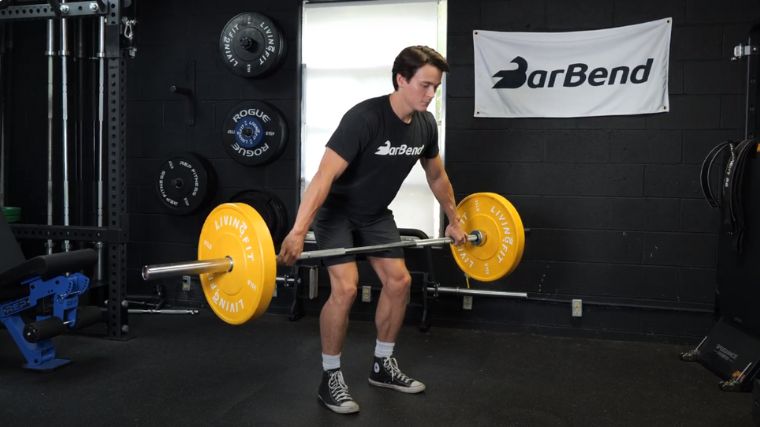
It’s worth noting that you don’t need to pull a heavy single max to get an idea of what your one-rep max is. You can find your one-rep max by plugging in the most weight you’ve pulled for multiple reps into our calculator below. Again, 1RM calculators provide an estimated max — this number shouldn’t be considered your true max. You can, however, base training percentages around your estimated 1RM.
One Rep Max Calculator
How Much Should I Deadlift?
Deadlift standards are useful only because they push you to implement progressive overload (more on that below) and motivate you to keep training for more progress. There’s no need to overcomplicate your training. Simply select a strength-training program and get to work.
That said, consider these factors when asking yourself, “How much should I be able to deadlift?” or “What is a good deadlift weight?” This chart should be an occasional reference point to gauge your progress. Otherwise, don’t spend too much time fretting over these numbers.
| Fitness Level | Male Standard* | Female Standard |
| Beginner | BW** | Less than BW |
| Novice: 0-2 years of consistent training | 1.25 x BW | BW |
| Intermediate: 2-5 years of consistent training | 1.50 x BW | 1.25 x BW |
| Advanced: 5+ years of consistent training | 2.00 x BW | 1.50 x BW |
*Data is not readily available for nonbinary lifters. According to trans powerlifter, certified personal trainer, and BarBend editorial team member Alex Polish, trans and nonbinary athletes have a few choices when assessing their strength standards. “If you’ve been undergoing HRT (hormone replacement therapy) for over a year, you can align your goals more closely with your actual gender. For nonbinary athletes, that might mean averaging the percentages a bit. If you’re not doing HRT or you’ve been doing it for less than a year, you might judge your numbers based more on your gender assigned at birth. Be attentive to your body and your own athletic journey, though: research suggests that trans women may be disadvantaged compared to cis women peers in lower body strength, so be generous with yourself and consult a trans-affirming personal trainer if you can. (4)”
**BW refers to body weight
Demographics
The sport of powerlifting — in which the deadlift is one of the three judged lifts — divides competitors by age, gender, and weight. This is the case because those three factors are significant determinants of how much you can physically lift.

“As a general rule, your demographics may play an integral role in what you ‘should’ be able to lift,” says BarBend editorial member Kate Meier, a certified personal trainer, competitive weightlifter, and owner of a weightlifting gym. “This is based on decades of studies and competitive results: people with lower body weight do not typically lift as much as people with higher body weight; women tend to not be able to lift as much as men, and people in their 20s can typically lift more than people in their 60s.”
Pre-Existing Injuries
Getting wrapped up in the “should” game can be dangerous. Just because someone has deadlifted three times their body weight, doesn’t mean you can (which is OK).
“If you have pre-existing injuries, you probably don’t want or need to max out your deadlift,” Meier says. “Therefore, even thinking about what you ‘should’ be able to do is a moot point. If you have strong legs and core but a weakened grip due to arthritis, then you won’t be able to pull as much weight off the ground because you won’t be able to hold on to the bar.”
This doesn’t mean you can’t make progress or find workarounds. Always consult a medical professional before starting a weightlifting program, especially if you are injured.
Fitness Goals
The numbers in the chart below are guidelines for general fitness enthusiasts, but if you plan on competing, you’ll eventually graduate to a different set of standards.

For example, powerlifters, strongman athletes, and Olympic weightlifters all have different deadlift goals. Powerlifters compete in the deadlift, so their standard may be the national or world record in their weight/gender/age category. Weightlifters usually gauge their deadlift based on a percentage of their clean — a competitive weightlifter may want to deadlift 150% of their clean. Strongman athletes often deadlift a max single or a specific weight for max repetitions, sometimes from different heights, so they’ll spend 12 to 16 weeks training to reach a specific competition standard.
Remember that these are just benchmarks. You don’t need to lift any amount of weight to see progress or be a “real” lifter. To ensure your strength is progressing, you can add more weight or reps over time, or simply focus on improving technique.
How To Deadlift Heavier
You’re on this page to learn about how strong your deadlift already is and, presumably, how to increase it. The good news is that although adding weight to your deadlift takes hard work, it’s a simple process. We have four deadlift tips for you to follow that should add pounds onto the bar over time.
Find a Program
A true beginner may be able to start deadlifting with a random set and rep scheme for a couple of months and see good strength gains. Most people, however, need an organized program of deadlift workouts to consistently make progress month after month.
As for which to follow? There are many effective training plans. Meier’s personal favorite is Jim Wendler’s 5/3/1 program. I have also followed the 5/3/1 program for 16 weeks (four cycles) and added 75 pounds to my deadlift as an intermediate lifter.
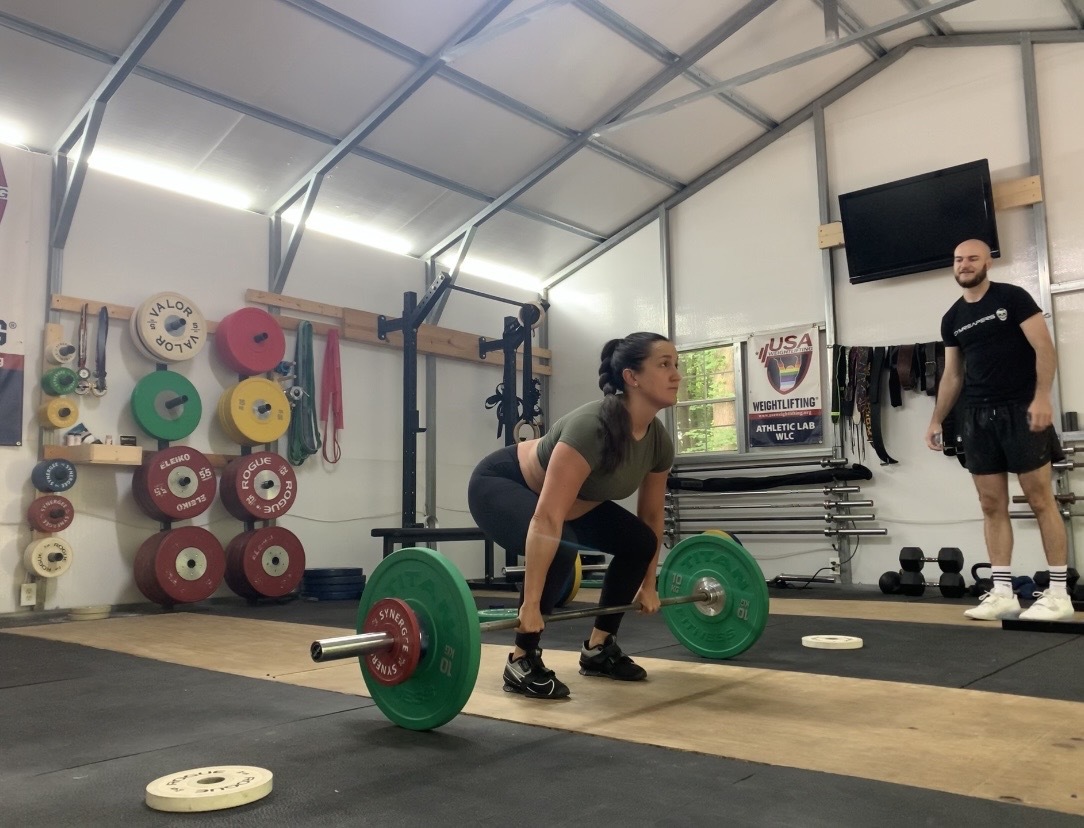
“The program calls for you to do [three to four primary] lifts once a week based on a percentage of your one-rep max,” Meier explains. “If you were to follow that program, you would take your percentages based on your max — either your true one-rep max or what a 1RM calculator spits out based on your most recent best deadlift set.”
Implement Progressive Overload
Any good program, like Wendler’s 5/3/1, will factor in a training technique called progressive overload. Simply put, progressive overload is when you add more weight, reps, or sets to an exercise each week so your body adapts and gets stronger (and/or bigger) over time.
Whether you’re working on your bench press, overhead press, front squat, or push-ups, progressive overload is essential to making progress in the gym. If you do not consistently lift more weight and/or more reps, you will not see any notable progress.
Master Your Technique
So, how do you perform a deadlift with proper form? Follow the steps below.
- Stand in front of a loaded barbell with your feet roughly hip-width apart, and then root them to the floor by twisting them slightly apart. Bring your shoulders over the bar, and then push your butt back and hinge over at the hips.
- Grab the barbell with both hands set just outside your shoulders. The inside of your hands should touch your legs.
- Simultaneously drop your butt toward the ground and raise your chest. Drive with your legs, keeping the barbell pressed against your shins, to lift the barbell off of the floor.
- Drive your hips forward as the bar passes your knees until they’re completely locked out. That’s one rep.
Now, back to powerlifting for a second. Even though the goal of powerlifting is to lift as much weight as possible in a competition, powerlifting athletes typically spend months lifting well below their one-rep max. Repeatedly hoisting sub-maximal weights — we’re talking about between 60 and 80% of your max — allows you to lift each rep with proper form. As a result, you can build proper movement patterns while limiting your fatigue.
You’re teaching your body to get strong in the right positions. Even though you may be able to lift more weight with less-than-great technique, strength plus technique is the ultimate formula for strength gains and longevity.
Plan Accessory Lifts Around Your Deadlift
To strengthen your deadlift, you must also strengthen the muscles involved in the exercise. That means reviewing your training and ensuring you aren’t skimping on back, hamstring, and glute work.
Any deadlift program worth its weight will feature the proper accessory exercises at the correct frequency. Here are a few of the best deadlift accessory exercises (in no particular order):
- Rack pull
- Bent-over row
- Good morning
- Back squat
- Romanian deadlift
Deadlift Standards FAQs
How much should I be able to deadlift?
That depends on your fitness goals. However, our general recommendations for men and women are:
-
- Beginner: body weight (BW) // Less than BW
-
- Novice: 1.25x BW // BW
-
- Intermediate: 1.50x BW // 1.25x BW
-
- Advanced: 2.00x BW // 1.50x BW*
* Widespread statistics and standards for nonbinary athletes are as yet unavailable.
Is deadlifting 2x bodyweight good?
Yes. If you can deadlift double your bodyweight, you are generally considered to have an advanced deadlift.
How do I calculate my 1RM for deadlifts?
You can test your one-rep max two ways. One is to plan a max-out day. Begin with an empty barbell, and then slowly add weight to the bar each set until you reach your true one-rep max. The second way is to pick a lighter weight — like 75 to 85% of your supposed one-rep max — and lift it for as many reps as possible. Plug that load and the number of reps you performed into a one-rep max calculator to estimate your 1RM.
Is deadlifting 300 pounds a lot?
It depends. Generally, deadlift standards are based on a percentage of your body weight. If you weigh 150 pounds and deadlift 300, that’s considered advanced. However, a 300-pound man deadlifting 300 pounds is considered beginner status.
References
- Almstedt HC, Canepa JA, Ramirez DA, Shoepe TC. (2011). Changes in bone mineral density in response to 24 weeks of resistance training in college-age men and women. J Strength Cond Res. 25(4):1098-103.
- Deadlift Standards for Men and Women. (n.d.) Strength Level. https://strengthlevel.com/strength-standards/deadlift/lb
- Deadlift Strength Standards for Men and Women. (n.d.) Strength Log. https://www.strengthlog.com/deadlift-strength-standards-lb/
- Hamilton, B., Brown, A., Montagner-Moraes, S., Comeras-Chueca, C., Bush, P. G., Guppy, F. M., & Pitsiladis, Y. P. (2024). Strength, power and aerobic capacity of transgender athletes: a cross-sectional study. British Journal of Sports Medicine, 58(11), 586-597.

