


In 1979, bodybuilder Frank Zane made physique sports history when he struck a now-iconic pose on stage at that year’s Mr. Olympia (history buffs will recall that Zane won that competition), captured at the exact right moment by his wife, Christine.
Sure, Zane looked great under the lights, as he always did. But a large part of why Zane has become a larger-than-life icon in the realm of pro bodybuilding — and why the photo in question became so famous — comes down to his impeccable abdominal control. Specifically, Zane’s ability to perform a pristine stomach vacuum.
[Related: The 10 Best Posers in Men’s Bodybuilding History]
You might not know what this maneuver is called, but you undoubtedly recognize it when you see it — the stomach vacuum walks the line between core control and contortionism. It’s a staple of the modern-day Classic Physique division of bodybuilding and, believe it or not, has a history of clinical usage in physical therapy as well.
Here’s everything you need to know about the stomach vacuum exercise (if it’s even an exercise to begin with), plus how to do it yourself thanks to some tips from Zane himself and physique sports historian Dr. Conor Heffernan.
What Is a Stomach Vacuum?
To the uninitiated, the stomach vacuum might look grotesque, but it’s actually an impressive display of muscular control. The stomach vacuum involves exhaling fully to remove all air from your lungs and diagram, then contracting your deep core musculature to pull the abdominal cavity inward toward the spine.
Is It an Exercise or a Bodybuilding Pose?
So, is the vacuum a legitimate exercise or an exercise in vanity? Well, it’s actually both. The movement has roots in Eastern yoga practices, where “abdominal drawing” is practiced as part of the Uddiyana Bandha pose (or abdominal upward lock) . But it has surprisingly diverse applications in the modern day, too.
- The Vacuum Exercise: Stomach vacuuming is used in clinical rehabilitation settings, specifically “to recover the neuromuscular control of athletes whose trunk stability muscles have been damaged.” (1)
- It’s also sometimes prescribed as a methodology of improving chronic lower back pain symptoms. (2)
- The Vacuum Pose: Bodybuilders incorporate the stomach vacuum into other full-body poses on stage to demonstrate mastery over their muscularity. It is also a mandatory pose in the Classic Physique division of Men’s bodybuilding.
[Read More: Want to Build a Complete Physique? Don’t Forget to Train These Overlooked Muscles]
Regardless of its use case, the vacuum is a powerful (and challenging) demonstration of core control. Scientific studies on the move have shown that performing the vacuum engages not only the transverse abdominal muscle, but other deep core structures like the internal obliques, pelvic floor, diaphragm, and multifidus. (3)
History of the Stomach Vacuum, From Dr. Conor Heffernan
Dr. Heffernan is a bodybuilding historian and lecturer in the Sociology of Sport at Ulster University in the United Kingdom. Here’s what he’s got to say on the history of the stomach vacuum and its evolution within pro bodybuilding:
[The vacuum] is one of the oldest and most impressive poses in bodybuilding. It combines leanness, posture, and strength into a truly iconic display … There’s a long history of the vacuum being used in yoga practices, but it began in bodybuilding in the early 1900s, when the exhibition of ‘muscle control’ rose to prominence.
– Dr. Conor Heffernan
[Related: Hunter Labrada Practices Vacuum Posing In 3 Positions for a Tighter Midsection]
Heffernan notes that the first major physique “celebrity” to utilize the vacuum was a performer named Maxick, but Zane is “most synonymous” with the vacuum’s incorporation into pro bodybuilding.
“Its inclusion into today’s Classic Physique division stems from the 1990s, when the so-called ‘HGH gut’ effect was rampant throughout the sport,” Heffernan believes. He refers to a side effect of abusing human growth hormone to enhance hypertrophy, which can sometimes create an enlarged, distended abdomen.
How To Do a Stomach Vacuum
No matter what you’re using it for, know that the stomach vacuum isn’t easy to perform. Most folks aren’t accustomed to activating the deep torso muscles that help you conceal the contents of your abdomen.
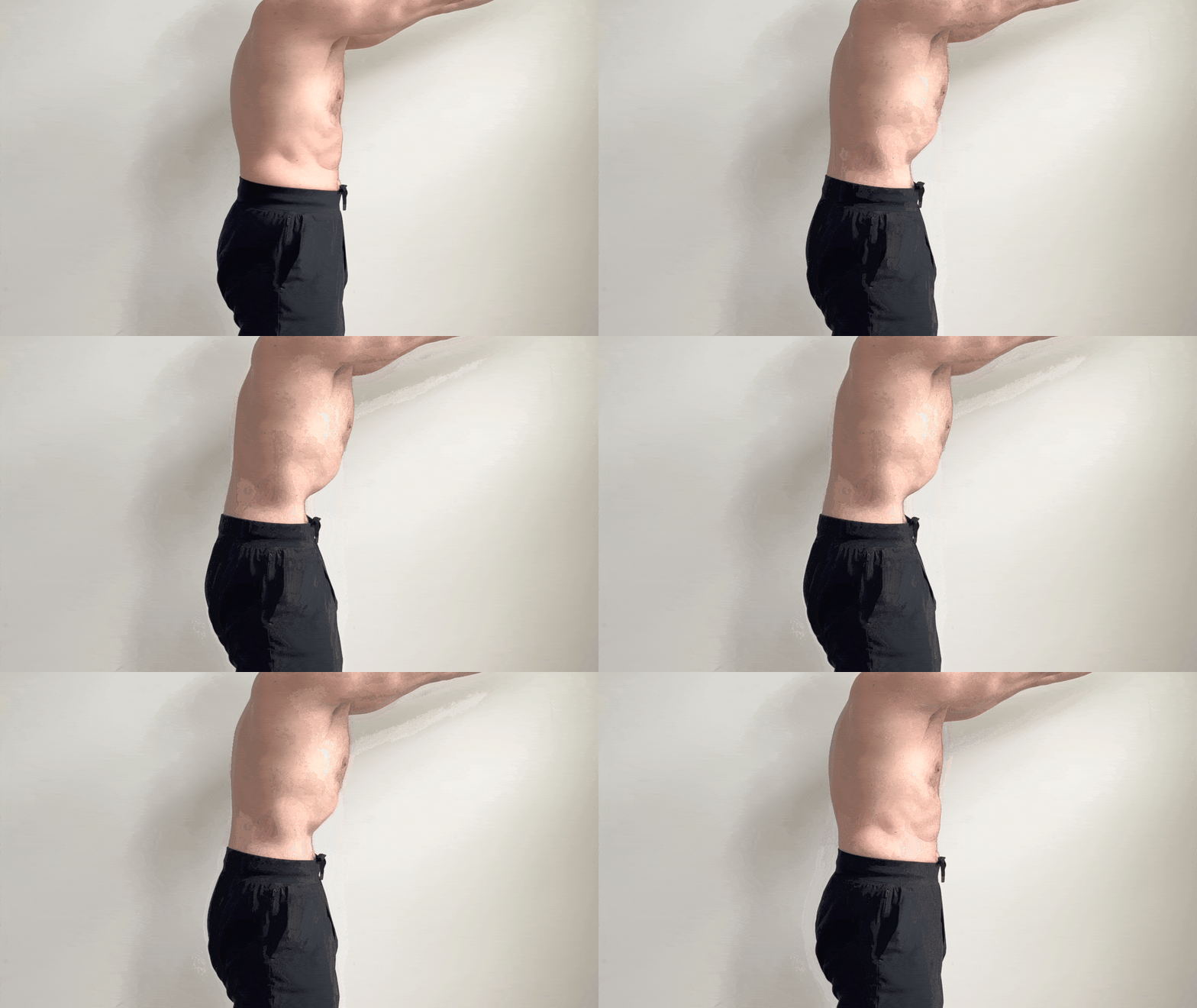
There are three different progressions to the stomach vacuum. Most people find it easiest to learn by performing the vacuum while laying down on their backs, then from a kneeling or crouched position, and eventually while standing upright. Regardless of your posture, the technique is the same:
- Choose your initial position. If you’ve never done a vacuum before, it’s best to lie down on the floor on your back.
- Inhale deep and long through your nose, filling your stomach with air. Allow your belly to inflate toward the ceiling.
- Exhale fully through your mouth, pursing your lips and “pushing” all of the air out of your torso.
- Continue exhaling longer than you think you need to. Your core should naturally begin to contract as you “empty your tank.”
- Once you’re fully emptied of air, “pull” your belly button back toward your spine, drawing your abdominal cavity inward.
Coach’s Tip: If done correctly, you should feel a sharp contraction in your transverse abdominis muscle, which runs diagonally down either side of the front of your lower stomach.
Stomach Vacuum Tips From Bodybuilder Frank Zane
Zane was a three-time Mr. “O” winner and a paragon of the “golden era” of professional bodybuilding, thanks in no small part to his mastery over the vacuum pose. In an Aug. 2020 Facebook post, Zane discussed the stomach vacuum at length:
“The [stomach vacuum] was probably my best pose. I remember doing it for the 1970 Mr. Universe. Afterward, Arnold [Schwarzenegger] told me it was maybe my pest pose, and to do it at the end of my routine. It usually brought the house down.”
- “To learn it, start with doing it bent forward, with your hands on your thighs,” Zane says, almost mimicking the posture of someone who is about to vomit.
- Once you’ve mastered it in that position, Zane suggests trying to recreate it standing upright, with your hands clasped behind your head.
- “It’s good to practice this pose when you are dieting to get in shape by getting control of your waistline,” Zane notes.
[Related: 10 Bodybuilders With Some of the Most Chiseled Abs in the Sport’s History]
Zane and other bodybuilders believe that the improved muscular control over the deep abdomen can create the illusion of a slimmer, tighter waist. For bodybuilders, maintaining a level of muscular “tautness” on stage at all times — even when standing “relaxed” — is part of the game.
Benefits of the Stomach Vacuum
While the stomach vacuum is mainly used to enhance a bodybuilder’s presentation on stage, the benefits aren’t purely aesthetic. Here’s what you can expect to gain by mastering the vacuum yourself:
Breath Control
The stomach vacuum requires exceptional control over your breathing patterns. Most people don’t know how to fully expire all of the air from their body, but doing so is integral if you want to create an airtight (forgive the pun) vacuum pose.
May Treat Back Pain
It may surprise you to learn, but the vacuum exercise is occasionally prescribed in clinical settings as a means of treating lower back pain. Studies have shown that the deep abdominal control required to perform the vacuum may help dampen pain symptoms that arise as a result of injury or habitually poor posture. (2)
Improved Bodybuilding Posing
If you aspire to the bodybuilding stage someday, the vacuum is an excellent technique to have in your back pocket — if you want to compete in the Classic Physique division, it’s required reading.
Even if you aren’t forced to perform the vacuum, the abdominal and postural mastery afforded by the move will benefit you on stage. After all, remember that as a bodybuilder, you’re being judged on your appearance at all times; before, between, and after you hit your primary poses.
A Fun Party Trick
If nothing else, the ability to perform the stomach vacuum is alluring for its novelty. While it may look grotesque to some folks who have never seen it done in person before, hitting a stomach vacuum is a sure-fire way to drop jaws.
FAQs
Does the stomach vacuum really work?
It depends. The stomach vacuum is a muscle control exercise not all that dissimilar from a lat spread pose. The powerful isometric contractions required to perform the vacuum do have some health and clinical benefits, though, depending on how you use it.
What is the stomach vacuum exercise?
Stomach vacuums have their roots in ancient yoga practices, but are used contemporarily in clinical settings as a way of treating back pain and associated conditions. In bodybuilding, the vacuum is part and parcel of a physique athlete’s overall presentation on stage.
Can a stomach vacuum help you lose weight?
No. While it may quite literally make your waist appear smaller and your stomach literally hollow, the stomach vacuum is an optical illusion. It will not directly create fat loss. However, some bodybuilders do believe that regularly training the vacuum can contribute to a tighter, more defined midsection, provided your body fat levels are low enough.
References
- Lee, J. S., Kim, T. H., Kim, D. Y., Shim, J. H., & Lim, J. Y. (2015). Effects of selective exercise for the deep abdominal muscles and lumbar stabilization exercise on the thickness of the transversus abdominis and postural maintenance. Journal of physical therapy science, 27(2), 367–370.
- Saiklang, P., Puntumetakul, R., & Chatprem, T. (2022). The Effect of Core Stabilization Exercise with the Abdominal Drawing-in Maneuver Technique on Stature Change during Prolonged Sitting in Sedentary Workers with Chronic Low Back Pain. International journal of environmental research and public health, 19(3), 1904.
- Lynders C. (2019). The Critical Role of Development of the Transversus Abdominis in the Prevention and Treatment of Low Back Pain. HSS journal : the musculoskeletal journal of Hospital for Special Surgery, 15(3), 214–220.
Featured Image: @therealfrankzane on Instagram

